

Post-Tuberculosis Lung Disease (PTLD): The Hidden Burden After TB Cure

Tuberculosis (TB) is treatable and curable. However, for many patients, completing treatment does not mean their lungs fully recover. A significant number continue to experience lung damage after TB, leading to a condition known as Post-Tuberculosis Lung Disease (PTLD).
PTLD refers to chronic respiratory problems that persist even after successful TB treatment. Understanding this condition is essential to prevent long-term complications and protect lung health.
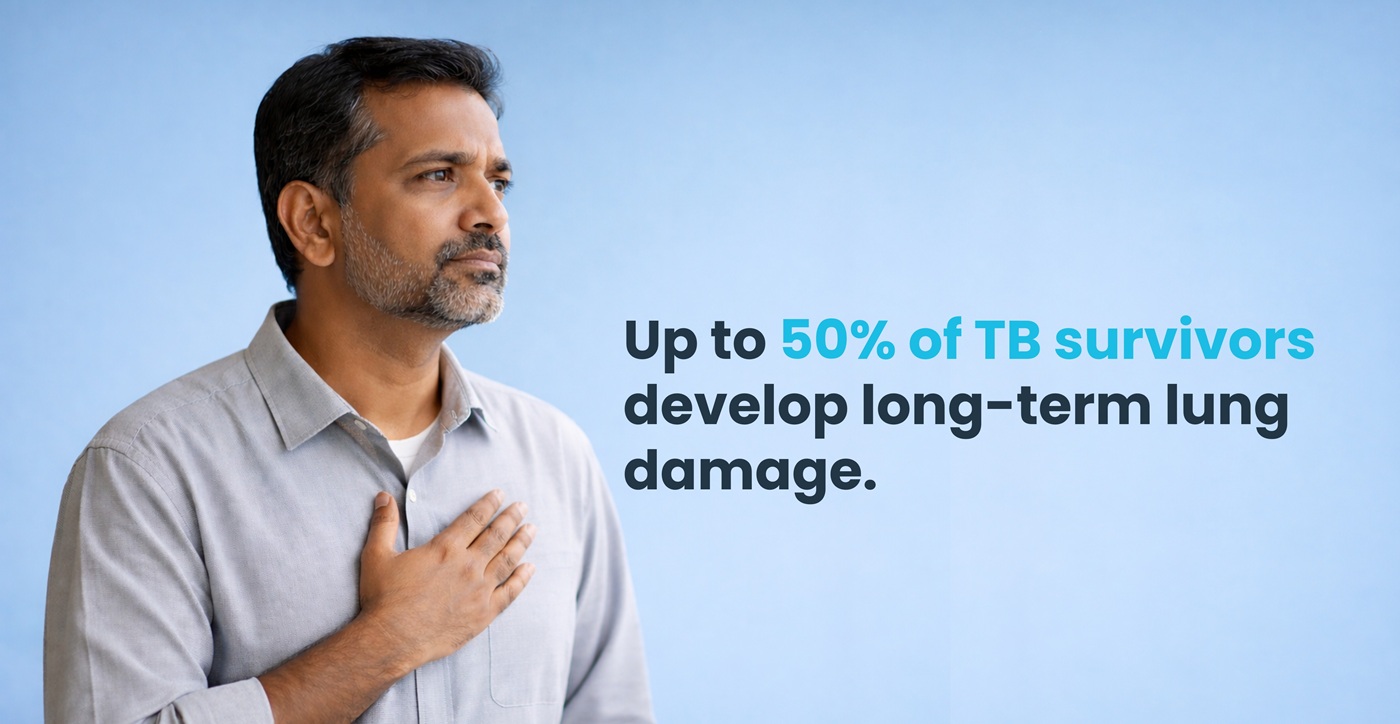
Do you know studies indicate that roughly 50% of TB survivors experience long-term, chronic respiratory health problems – which has led to the recognition of Post-Tuberculosis Lung Disease (PTLD) as a significant global health challenge. [Source: Springer Nature]
What Is Post-Tuberculosis Lung Disease (PTLD)?
Post-Tuberculosis Lung Disease is a form of chronic lung disease after TB that develops due to structural damage caused during infection.
Even when the TB bacteria are eliminated, the inflammation and scarring left behind can result in:
- TB-related lung fibrosis
- Bronchiectasis
- Airway narrowing
- Reduced lung capacity
This explains why lungs don’t recover after TB in many individuals.
Long-Term Effects of Tuberculosis on the Lungs
The long-term effects of tuberculosis can vary from mild breathlessness to severe respiratory impairment.
Common issues include:
- Persistent airflow limitation
- Oxygen level fluctuations
- Recurrent respiratory infections
- Progressive lung scarring
In some cases, untreated or severe PTLD can progress to advanced respiratory failure.
Symptoms of PTLD
Many patients assume that symptoms after TB treatment are normal recovery signs. However, the following post-TB lung fibrosis symptoms should not be ignored:
- Breathlessness after TB treatment, especially during exertion
- Persistent cough after TB cure
- Wheezing or chest tightness
- Frequent chest infections
- Reduced exercise tolerance
If these symptoms continue, it may indicate underlying PTLD rather than active TB recurrence.
Why Follow-Up After TB Is Important
One of the most overlooked aspects of TB care is follow-up care after tuberculosis. Completing medication does not mean lung evaluation should stop. Structured pulmonary follow-up helps:
- Assess residual lung damage
- Identify progressive fibrosis
- Monitor oxygen levels
- Initiate early PTLD treatment
Patients often ask, “When to see a pulmonologist after TB?”
The answer is simple — if symptoms persist beyond treatment completion or daily activities become limited.
Consulting a pulmonologist can help determine whether further evaluation such as lung function testing or HRCT imaging is required.
Looking for a pulmonologist in Secunderabad? Contact us.
How Is PTLD Treated?
There is no single cure to reverse lung scarring, but PTLD treatment focuses on improving quality of life and slowing progression.
Management may include:
- Bronchodilators and inhaled medications
- Pulmonary rehabilitation
- Oxygen therapy when required
- Vaccination and infection prevention
- Regular monitoring by a tuberculosis specialist
Early intervention significantly improves outcomes and prevents worsening of chronic respiratory impairment.
Looking for a tuberculosis specialist in Secunderabad? Contact us.
Can Severe PTLD Lead to Advanced Lung Disease?
In advanced cases, extensive TB-related lung fibrosis can result in severe, irreversible damage. Some patients may develop:
- Chronic respiratory failure
- Recurrent hospitalizations
- Oxygen dependency
- Severely reduced lung capacity
In such situations, evaluation by a lung transplant doctor may be considered for carefully selected patients.
While lung transplant is not required for most individuals with PTLD, timely referral is crucial when disease progresses despite optimal care.
Early assessment helps differentiate between active infection, PTLD, or other chronic lung conditions.
The Takeaway
Tuberculosis cure does not always mean lung recovery.
Post-Tuberculosis Lung Disease is a real and often under-recognized condition.
Early recognition, structured follow-up, and specialist care can prevent progression and preserve lung function.
If you or a family member continues to experience respiratory symptoms after TB treatment, do not ignore them. Timely consultation with a TB doctor in Secunderabad can make a significant difference in long-term outcomes.
Need a consultation?
Book an appointment with an expert lung specialist at Yashoda Hospitals to discuss the best diagnostic plan for your conditions.
Contact us or drop us a message. | Visit us today!
Source/s: Banner image by ChatGPT AI
[TB doctor in Secunderabad, tuberculosis specialist in Secunderabad, TB specialist in Secunderabad, pulmonologist in Secunderabad, lung transplant doctor in Secunderabad]
Related posts